What is a Dynamic Microphone: Complete Beginner Guide in 2026
Have you ever wondered why some microphones work better for live shows while others are perfect for podcasts and recordings? A dynamic microphone is one of the most trusted choices for both.
It handles loud sounds very well. It does not need batteries or phantom power. It also stays strong even with heavy use, which makes it a reliable option for beginners and professionals.
Many people face problems like background noise or weak build quality with other microphones. A dynamic mic helps solve these issues and delivers clear, natural sound in most situations.
In this blog post, we will explain what is a dynamic microphone, its main features, advantages, disadvantages, and how you can use it in the right way.
Dynamic Microphone Meaning (Definition of Dynamic Microphone)
A dynamic microphone is a simple type of microphone that does not need extra power to work. It is strong, easy to use, and perfect for handling loud sounds.
You can use it on stage, in noisy places, or even in rough conditions, and it will still perform well without issues.
Think of it like a loudspeaker working in reverse. A loudspeaker takes electrical signals and turns them into sound. A dynamic microphone does the opposite. It takes sound waves and turns them into electrical signals.
This is why singers, public speakers, and musicians often choose it for live performances and loud instruments.
Examples of Common Dynamic Microphones
Many people use dynamic microphones every day because they are durable, reliable, and easy to handle. Here are some popular examples:
- Shure SM58: One of the most famous dynamic microphones. It is widely used by singers and speakers because it is strong and works well on stage.
- Shure SM57: Commonly used for instruments like drums and guitar amplifiers. It handles very loud sounds without distortion.
- Sennheiser e835: A popular choice for live singing and public speaking. It delivers clear sound and strong performance.
- Audio-Technica ATR1300: A good option for beginners, podcasts, and basic live use. It is simple and budget-friendly.
These microphones show why dynamic mics are trusted by musicians, podcasters, and speakers worldwide. They are simple, durable, and give clear sound in most real-world situations.

How a Dynamic Microphone Works
A dynamic microphone works by changing sound waves into electrical signals. It uses simple internal parts to do this job.
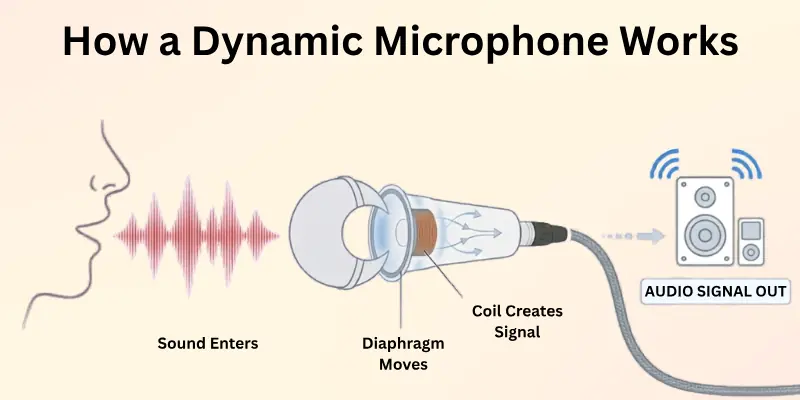
- Diaphragm: Inside the microphone, there is a thin part called the diaphragm. When sound waves hit it, the diaphragm starts to move.
- Coil Movement: The diaphragm is attached to a small wire coil. When the diaphragm moves, the coil moves with it.
- Magnet Interaction: The coil sits inside a magnetic field. As it moves through the magnet, it creates a small electric current.
- Electrical Signal Output: This movement produces an electrical signal that matches your voice or sound. The microphone then sends this signal to a speaker, recorder, or audio device.
Key Features of Dynamic Microphones
A dynamic microphone is popular because it is simple, strong, and reliable. It works well in many real-life situations like live shows, speaking events, and basic recording.
- Strong and Durable Build: Dynamic microphones are built to handle rough use. They can survive drops, travel, and heavy handling without easily breaking.
- No External Power Needed: They do not need batteries or phantom power. You can plug them in and start using them right away.
- Handles Loud Sounds Easily: They work very well with loud voices and instruments. Even high sound levels do not usually cause distortion.
- Reduces Background Noise: Dynamic microphones focus mainly on the sound in front of them. They ignore much of the background noise, which makes the audio clearer.
- Simple to Use: There are no complex settings. Anyone can use a dynamic microphone without technical knowledge.
- Affordable Option: Most dynamic microphones are budget-friendly. This makes them a good choice for beginners and everyday users.
- Works Well in Live Environments: They perform best in stage shows, public speaking, and outdoor events where conditions are not controlled.
Types of Dynamic Microphones
Dynamic microphones are not all the same. They come in different types based on their design and how they capture sound.
Each type has its own use and sound style. Let’s understand them in a simple way.
1. Moving Coil Dynamic Microphone
This is the most common type of dynamic microphone you will see in daily use. It works with a simple system. A diaphragm is attached to a small wire coil. When sound hits the diaphragm, it moves the coil inside a magnetic field. This movement creates an electrical signal.
This type is strong and easy to handle. It works well in live concerts, speeches, podcasts, and basic studio recordings. It also handles loud sounds very well, which makes it a safe choice for beginners.
Best for:
- Live singing
- Public speaking
- Instruments like drums and guitar amps
- Beginner recording setups
2. Ribbon Dynamic Microphone
A ribbon microphone is a special type of dynamic microphone. Instead of a coil and diaphragm, it uses a very thin metal ribbon placed inside a magnetic field.
When sound waves hit the ribbon, it moves slightly. This movement creates a very natural and smooth audio signal.
Ribbon microphones are known for their soft and warm sound. They capture fine details, which makes them popular in professional studios. However, they are more delicate than moving coil microphones and need careful handling.
Best for:
- Studio vocals
- Acoustic instruments
- Radio broadcasting
- Professional music recording
3. Dual-Element Dynamic Microphone
This type is less common but very useful in advanced audio setups. It contains two microphone elements inside one body.
These elements work together to capture sound more clearly or from different directions. This helps improve sound quality and control unwanted noise.
It is often used in specialized recording or broadcasting environments where better sound separation is needed.
Best for:
- Advanced studio recording
- Broadcasting setups
- Situations needing directional control
Common Myths About Dynamic Microphones
Many people believe wrong things about dynamic microphones. These myths often create confusion for beginners.
Let’s clear them up with simple facts.
Myth 1: Dynamic microphones give low-quality sound
Solution: This is not true. Dynamic microphones do not give low-quality sound. They are designed to handle real-world situations like live shows and loud environments. They may not capture very tiny details like studio microphones, but they still give clear, strong, and natural audio.
Myth 2: They are only for beginners
Solution: Dynamic microphones are not just for beginners. Many professional singers, speakers, and musicians use them on stage. They are trusted in concerts and live events because they are reliable and durable.
Myth 3: They do not work well for recording
Solution: Dynamic microphones work very well for recording loud sources like vocals, drums, and guitar amps. They are widely used in home studios and professional setups, especially where background noise is a problem.
Myth 4: They need external power to work
Solution: Dynamic microphones do not need batteries or phantom power. They work using magnetic induction, so you can plug them directly into your device and start using them.
Myth 5: All microphones are the same
Solution: This is incorrect. Different microphones are made for different purposes. Dynamic microphones are best for live sound, while other types, like condenser microphones, are better for detailed studio recording.

Advantages of Dynamic Microphones
Dynamic microphones are popular because they offer many practical benefits. They work well in real-life situations and are easy for anyone to use.
- Strong and durable build: They can handle rough use, drops, and travel without getting damaged easily.
- No external power needed: They work without batteries or phantom power, so they are very simple to use.
- Great for loud sounds: They handle high sound levels without distortion, which makes them perfect for concerts and live events.
- Reduces background noise: They mainly pick up sound from the front, so unwanted noise stays low.
- Easy to use for beginners: There are no complex settings. You can plug in and start recording or speaking.
- Affordable option: They are usually budget-friendly, which makes them a good choice for beginners and home users.
- Reliable for live performance: They perform well in stage shows, outdoor events, and other real-world environments.
Disadvantages of Dynamic Microphones
Dynamic microphones are useful, but they are not perfect. They also have some limits that you should know before using them.
- Less detail in sound: They do not capture very fine audio details. This makes them less ideal for high-quality studio recording.
- Not best for soft sounds: They work better with loud voices and instruments. Very soft sounds may not come out clearly.
- Limited frequency range: They do not capture the full range of sound like condenser microphones do.
- Not ideal for professional studio vocals: In studio environments, they are often replaced by more sensitive microphones for better clarity.
- Needs close distance for best sound: You must stay close to the microphone. If you move far away, the sound becomes weak.
- Heavier than some other microphones: Some models are bulky, which can feel less comfortable for long use.
Tips for Beginners Using a Dynamic Microphone
Using a dynamic microphone is easy, but a few simple tips can help you get the best sound:
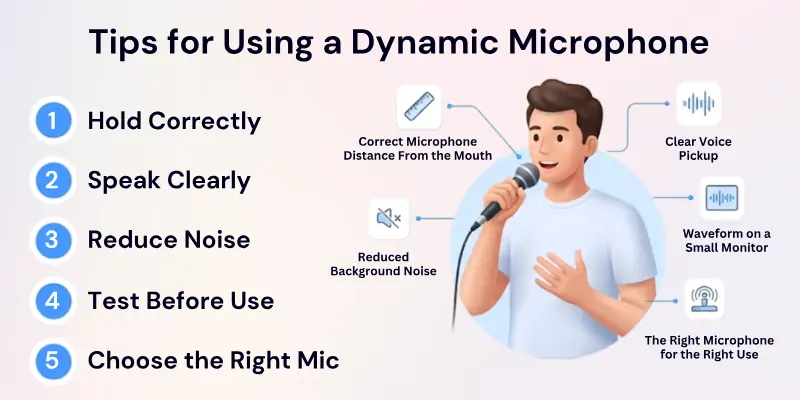
- Hold It Correctly: Keep the mic a few inches from your mouth. Don’t cover the mesh with your hand. This prevents muffled or distorted sound.
- Speak or Sing Clearly: Dynamic microphones capture strong, clear sounds best. Speak or sing steadily and directly into the mic.
- Avoid Extreme Noise: Even though dynamic mics handle loud sounds, try not to use them right next to very loud machines or speakers to prevent distortion.
- Test Before Using: Always check the mic and sound system before starting your recording or performance. This avoids surprises.
- Choose the Right Mic for the Job: Use a dynamic microphone for live shows, loud instruments, podcasts, or outdoor events. It’s tough and reliable.
By following these tips, beginners can get a clear and professional sound without much effort. A dynamic microphone is your friend in music, speaking, or recording projects!
Conclusion
So guys, it’s time to wrap up. In this article, we’ve covered what is a dynamic microphone in detail.
Personally, I suggest going for the Shure SM57 if you want something versatile for both instruments and general recording. It performs well in real situations and is trusted by many audio users around the world.
Now you know how dynamic microphones work and where they are used. If you found this helpful, don’t stop here. Explore more guides and keep improving your audio skills.
FAQs About Dynamic Microphones
Before we finish, let’s answer some of the most common questions people ask about dynamic microphones. These simple FAQs will help clear your confusion and help you choose the right mic with confidence:
A dynamic microphone is mainly used to capture loud and clear sound in real-life situations. It works best for live singing, public speaking, podcasts, and stage performances. It is also widely used for instruments like drums and guitar amps because it handles high sound levels very well.
In simple words, neither is “better” overall. Each one is designed for a different purpose.
- It depends on your use case
- Dynamic microphones are better for live shows and noisy places
- Condenser microphones are better for studio recording and detailed sound
No, dynamic microphones do not need external power. They work using a simple magnetic system that turns sound into an electrical signal. You can plug them directly into a mixer, speaker, or audio interface and start using them.
Yes, you can easily use a dynamic microphone for home recording. It is a good choice if your room has background noise. It helps reduce unwanted sounds and focuses more on your voice.
These microphones are easy to use, durable, and perfect for starting your audio journey.
- Shure SM58: Best for singing and live use
- Shure SM57: Great for instruments and general recording
- Audio-Technica ATR1300: Budget-friendly option for beginners
Yes, a dynamic microphone works very well for gaming and streaming. It reduces background noise from fans, keyboards, and room echo. This helps your voice sound clear and focused during online communication.
Singers prefer dynamic microphones because they handle loud sound without distortion. They are also strong and can survive rough stage use. Most importantly, they reduce background noise, which helps the voice stay clear during performances.
A dynamic microphone is durable because it has a simple internal design with fewer fragile parts. It does not rely on sensitive electronics like some other microphones. This makes it strong enough for travel, stage use, and long-term handling.


- Be Respectful
- Stay Relevant
- Stay Positive
- True Feedback
- Encourage Discussion
- Avoid Spamming
- No Fake News
- Don't Copy-Paste
- No Personal Attacks
- Be Respectful
- Stay Relevant
- Stay Positive
- True Feedback
- Encourage Discussion
- Avoid Spamming
- No Fake News
- Don't Copy-Paste
- No Personal Attacks