
Dynamic vs Condenser Microphone: Complete Comparison Guide
Sound quality plays a big role in content creation, music, and communication, and that is where the dynamic vs condenser microphone becomes important. Both microphones are widely used, but they work in completely different ways.
In this article, we will cover their differences, features, advantages, disadvantages, and ideal uses in simple language. You will also learn which one is better for your specific purpose. This guide is made to help you decide easily without technical confusion.
Let’s understand everything step by step. No more delay, let’s dive in right away!
What Is a Dynamic Microphone?
A dynamic microphone is a simple type of microphone that captures sound using a small moving coil. It works when sound hits the mic and turns into an electrical signal. I find it very useful because it does not need extra power to work. You can use it easily without any complex setup.
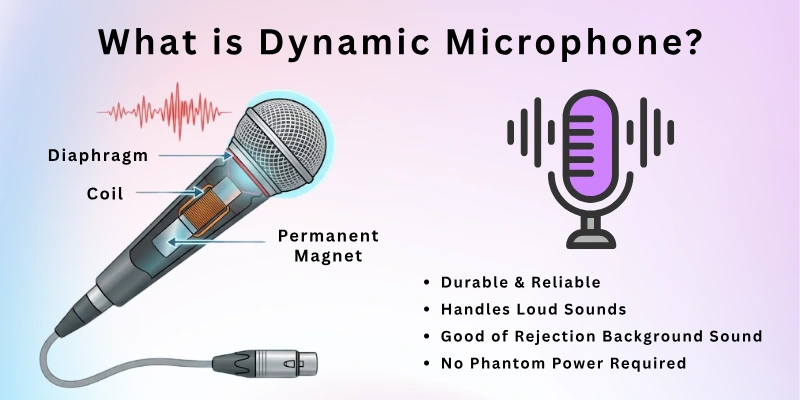
This microphone handles loud sounds very well. It does not pick up too much background noise, so it works better in busy places. Many people use it for live events, speeches, and stage performances.
Uses of a Dynamic Microphone
- Live singing and stage performances
- Public speaking and speeches
- Podcasting in noisy environments
- Recording loud instruments like drums and guitar
- Outdoor events and interviews
What Is a Condenser Microphone?
A condenser microphone is a sensitive microphone that captures very clear and detailed sound. It works by using a thin diaphragm that reacts to sound waves. You will notice it picks up even small sounds very clearly. This makes it great when you want clean and natural audio.
We often use this microphone in controlled spaces like studios. It needs extra power, called phantom power, to work properly. Because of its high sensitivity, it also catches background noise if the room is not quiet.

Uses of a Condenser Microphone
- Studio recording for vocals and music
- YouTube videos and content creation
- Voiceovers and narration work
- Podcast recording in quiet rooms
- Acoustic instrument recording, such as piano and guitar
Comparison Table of Condenser vs Dynamic Microphone
Here is a quick and simple difference between dynamic and condenser microphones so you can easily understand which one fits your needs better:
| Feature | Dynamic Microphone | Condenser Microphone |
| Sound Quality | Clear but less detailed | Very clear and detailed |
| Sensitivity | Low sensitivity | High sensitivity |
| Background Noise | Picks up less noise | Picks up more noise |
| Power Requirement | No external power needed | Needs phantom power |
| Best Use | Live shows and loud places | Studio recording and quiet rooms |
| Durability | Strong and tough | More delicate |
| Price Range | Usually affordable | Can be expensive |
| Ideal Users | Performers and speakers | Creators and studio users |
Comparison Between Dynamic and Condenser Microphone Features
Let’s quickly understand the main features that separate dynamic and condenser microphones. These points will help you see how both microphones behave in real use and what makes each one useful in different situations.
- Sound Quality
- Sensitivity
- Background Noise Handling
- Power Requirement
- Build Quality
- Durability
- Frequency Response
- Best Usage Environment
- Price Range
- Audio Clarity and Detail
Let’s understand each feature in detail.
1. Sound Quality
When we talk about how both microphones handle sound, we can clearly see a difference in overall audio output.
A dynamic mic gives a solid and natural sound. It works well for loud voices and live settings. You may notice it does not capture very fine sound details, but it keeps the audio strong and stable even in noisy places.
A condenser mic produces a much clearer and more detailed sound. It picks up soft tones and small audio details very well. This makes it a better choice when you want studio-level recording or clean voice output.
2. Sensitivity
Now let’s see how both microphones react to soft and quiet sounds in real use.
A dynamic mic has low sensitivity. It mainly focuses on strong sounds and ignores small background noise. This helps you use it in loud environments without distraction.
A condenser mic has high sensitivity. It easily picks up even soft sounds and small details in the room. This makes it perfect for controlled environments where you want every sound to be captured clearly.
3. Background Noise Handling
Here we compare how both microphones deal with unwanted sound around you.
A dynamic mic handles background noise very well. It only captures sound that is close to the mic. This is why many people use it on stage or in busy areas.
A condenser mic picks up more background noise because it is very sensitive. It captures sound from the room along with your voice. That is why it works best in quiet and sound-treated spaces.
4. Power Requirement
Let’s understand what power each microphone needs before it starts working.
A dynamic mic does not need any external power. You can plug it in and start using it easily. This makes it simple and beginner-friendly.
A condenser mic needs phantom power to work. It usually connects through an audio interface or mixer that provides power. Without it, the microphone will not function properly.
5. Build Quality
Now we look at how strong and durable both microphones are in daily use.
A dynamic mic has a strong and rugged build. It is designed to handle rough use and travel. You can drop or move it around without worrying too much.
A condenser mic is more delicate in design. It needs careful handling and is mostly used in studio environments. It is not made for rough or outdoor use.
6. Durability
Let’s check how long both microphones can last under regular and heavy use.
A dynamic mic is highly durable. It can survive tough conditions and long-term use without losing performance. Many performers trust it for live shows.
A condenser mic is less durable than a dynamic one. It works best when kept safe in a controlled studio setup. It may get damaged if handled roughly.
7. Frequency Response
Here we see how wide a range of sound each microphone can capture.
A dynamic mic has a limited frequency response. It focuses on mid-range sounds like voice and instruments. This keeps the output simple and strong.
A condenser mic has a wide frequency response. It captures low, mid, and high sounds in more detail. This gives a richer and more complete audio result.
8. Best Usage Environment
Now let’s compare where each microphone performs best in real life.
A dynamic mic works best in loud and active environments. You can use it in concerts, speeches, and outdoor events. It performs well even when there is noise around.
A condenser mic is best for quiet and controlled environments. You often use it in studios, home recording setups, and podcasts. It gives the best result when the room is silent.
9. Price Range
Let’s understand how much each microphone usually costs in the market.
A dynamic mic is usually more affordable. It fits beginners and people who need a budget-friendly option. You get good performance without spending too much.
A condenser mic is often more expensive. It costs more because it gives higher sound quality and studio-level detail. It is a better investment for professional creators.
10. Audio Clarity and Detail
Finally, let’s look at how clearly each microphone captures fine sound details.
A dynamic mic gives decent clarity but not very deep detail. It focuses more on strong and clear output than fine sound accuracy. This works well for live use.
A condenser mic gives very high audio clarity. It captures small details in voice and sound very clearly. This is why it is preferred for recording and content creation.
Advantages and Disadvantages of Dynamic and Condenser Microphones
Now, let’s clearly understand the strengths and limits of both microphones so you can choose the right one for your needs:
Advantages of Dynamic Microphones
Let’s look at why a dynamic mic is a strong choice for many users, especially in live and loud environments:
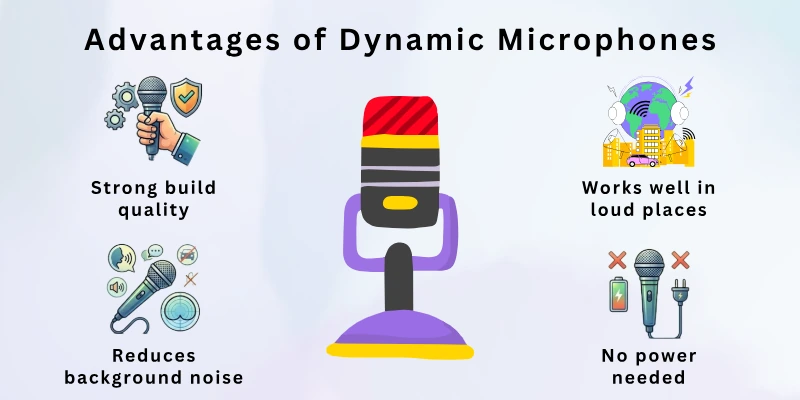
- Strong build quality: A dynamic mic has a tough body. It handles rough use, drops, and travel without damage. This makes it reliable for stage and outdoor work.
- Works well in loud places: It performs best when the sound level is high. You can use it in concerts, speeches, and events without audio distortion.
- Reduces background noise: It mainly picks up sound from close range. This helps you avoid unwanted noise from the surroundings.
- No power needed: A dynamic mic works without phantom power. You can plug it in and start recording or speaking easily.
Disadvantages of Dynamic Microphones
Now, let’s understand the limits of a dynamic mic, so you know where it may not perform well:
- Less sound detail: It does not capture very fine audio details. You may lose some clarity in voice recordings.
- Not ideal for studio recording: It is not the best choice for professional music production or voiceover work in controlled studios.
- Limited frequency range: It focuses more on mid-range sound. You may not get deep lows or sharp highs clearly.

Advantages of Condenser Microphones
Here is why a condenser mic is widely used in studios and content creation setups:
- High sound clarity: It captures very clear and natural sound. Even small voice details are recorded accurately.
- Wide frequency response: It picks up low, mid, and high sounds in detail. This gives a rich and full audio output.
- Best for studio use: It works perfectly in quiet and controlled environments like studios and home recording setups.
- Great for voice recording: It is ideal for singing, podcasting, and voiceovers because of its high sensitivity.
Disadvantages of Condenser Microphones
Now, let’s look at the limitations of a condenser mic so you can make an informed decision:
- Picks up background noise: It is very sensitive, so it also records room noise if the environment is not quiet.
- Needs external power: It requires phantom power from an audio interface or mixer to work properly.
- Less durable: It is delicate and can get damaged easily if handled roughly or used outside carefully controlled spaces.
- Not ideal for live use: It is not the best option for stage performances or noisy environments due to its sensitivity.
Who Should Use a Dynamic Microphone
Let’s understand who can get the best results from a dynamic mic based on real use cases and working environments.
- Live performers and singers: A dynamic mic is perfect for stage shows and concerts. It handles loud sound without distortion and gives a stable output.
- Public speakers and teachers: It works well in speeches, classrooms, and seminars. It keeps the voice clear even in large or noisy spaces.
- Podcast creators in noisy areas: If your room is not fully quiet, this mic helps reduce background noise and keeps focus on your voice.
- Beginners with simple setup needs: You can use it easily without extra equipment like phantom power. This makes it beginner-friendly and quick to start.
Who Should Use a Condenser Microphone
Now, let’s see who will benefit most from a condenser mic when they need high-quality and detailed sound.
- Content creators and YouTubers: It gives a clear and professional voice quality, which helps improve video and audio content.
- Studio singers and musicians: It captures fine details in vocals and instruments, making it ideal for music recording.
- Voiceover artists: It records soft and natural voice tones very clearly, which is important for narration work.
- Podcast creators in quiet rooms: If you record in a controlled space, it delivers clean and high-quality audio output.
Tips to Choose the Right Microphone for Your Needs
Choosing the right microphone becomes easy when you focus on your use, environment, and budget. These simple tips will help you make a clear decision without confusion.
- Know your main purpose first: Decide what you need the mic for. If you do live shows or speak in noisy places, a dynamic mic works better. If you record in a quiet room, a condenser mic is a better choice.
- Check your recording environment: Your room matters a lot. A noisy room fits a dynamic mic. A quiet and controlled room fits a condenser mic.
- Think about sound quality needs: If you need simple and strong sound, go for a dynamic mic. If you want clear, detailed, and professional sound, choose a condenser mic.
- Look at your budget: Dynamic mics are usually more affordable. Condenser mics can cost more but give higher audio quality.
- Check equipment requirements: A dynamic mic works without extra power. A condenser mic needs phantom power, so you may need an audio interface or mixer.
- Consider ease of use: If you want a simple plug-and-play option, a dynamic mic is easier. If you are okay with the setup and want better detail, a condenser mic is better.
- Think about long-term use: For rough and heavy use, a dynamic mic lasts longer. For studio-quality recording, a condenser mic gives better long-term content quality.
Common Mistakes When Choosing a Microphone
Many people choose a microphone without thinking carefully about their needs. This often leads to poor sound quality or wasted money.
Let’s look at the most common mistakes you should avoid.
- Buying without knowing your purpose: Many users buy a mic without deciding where they will use it. A dynamic mic works better for live use, while a condenser mic fits studio recording. Choosing wrong can affect your sound quality.
- Ignoring the recording environment: Some people forget to check their room noise. A condenser mic picks up background sound easily, so it is not good for noisy rooms. A dynamic mic works better in such places.
- Focusing only on price: Many users pick the cheapest option without checking features. A low-cost mic may not give the sound quality you need for your work.
- Not checking power requirements: A condenser mic needs phantom power, but beginners often ignore this. Without proper power, it will not work correctly.
- Choosing too advanced equipment: Some people buy professional mics without understanding setup needs. This can make the recording process difficult and confusing.
- Overlooking sound quality needs: Users sometimes pick a mic based on looks or brand. They forget to check if it gives a clear and suitable sound for their voice or content.
Conclusion
In this article, we’ve covered dynamic vs condenser microphones in detail and explored their features, uses, and differences.
Personally, I would suggest a dynamic mic for people who need a reliable option for daily or live use.
A condenser mic is best for creators who want detailed and clean audio for professional work. Both microphones are useful, but your goal decides the right pick.
Don’t skip the next part of the FAQs. I hope you will find something more interesting, so don’t miss it. If you miss it, you may lose something new.
Frequently Asked Questions (FAQs)
Here are a few important questions and answers about condenser microphone vs dynamic microphone:
The main difference between a dynamic mic and a condenser mic is how they capture sound. A dynamic mic works better for loud sounds and live use. A condenser mic captures more detail and works best in studios. Both serve different recording needs.
For beginners, a dynamic mic is usually a better choice. It is simple to use and does not need extra setup like phantom power. You can plug it in and start using it easily. It also works well in most environments.
A condenser mic is more sensitive because it uses a thin diaphragm that reacts quickly to sound waves. It captures even soft and small sounds clearly. This is why it is used in studio recordings and voiceovers. However, it also picks up background noise easily.
Yes, you can use a dynamic mic for singing, especially in live shows. It handles loud vocals very well without distortion. However, it may not capture fine details like a condenser mic. It is best for stage performance, not studio recording.
A condenser mic is widely used in professional audio work. It is best for studio recording, podcasts, and voiceovers.
Here are some common uses:
- Music and vocal recording in studios
- YouTube content and online videos
- Podcast and voice narration
- Acoustic instrument recording
Yes, a condenser mic needs phantom power to function. This power usually comes from an audio interface or mixer. Without it, the mic will not work properly. Dynamic mics do not need this power.
A dynamic mic is better for noisy environments. It picks up sound from a close distance and ignores background noise. This makes it ideal for live events and outdoor use. A condenser mic is not suitable for noisy places.
A condenser mic is great for home recording if your room is quiet. It captures clear and detailed sound, which improves recording quality. However, if your room has noise, it may also capture unwanted sounds. Sound treatment helps improve results.
Dynamic mics are usually more affordable and budget-friendly. They are great for beginners and live use. Condenser mics can be more expensive because they offer higher sound quality and studio-level detail. Your choice depends on your needs and budget.
For YouTube videos, a condenser mic is often the better choice. It gives a clear and professional voice quality. However, if you record in a noisy room, a dynamic mic can also work well. Choose based on your recording environment and setup.



- Be Respectful
- Stay Relevant
- Stay Positive
- True Feedback
- Encourage Discussion
- Avoid Spamming
- No Fake News
- Don't Copy-Paste
- No Personal Attacks
- Be Respectful
- Stay Relevant
- Stay Positive
- True Feedback
- Encourage Discussion
- Avoid Spamming
- No Fake News
- Don't Copy-Paste
- No Personal Attacks