
What is a Cardioid Microphone – Complete Beginner Guide in 2026
Do you struggle with echo, background noise, or unclear recordings, guys? A cardioid microphone can help. It picks up sound mainly from the front and ignores noise from the sides and back, making your voice clear and sharp.
In this blog post, we will explain what is a cardioid microphone, its main features, and the pros and cons. Even beginners can get professional-sounding results without complicated setups.
Just point the mic toward your voice, speak or sing, and enjoy crisp recordings that sound great to your audience.
What “Cardioid” Means
So, guys, before we go deeper, let’s understand what cardioid actually means. The word “cardioid” comes from “cardio,” which means heart. Why heart? Because the microphone’s pickup pattern looks a bit like a heart shape!
A cardioid microphone mainly picks up sound from the front and sides a little, but blocks sound from the back. Imagine pointing the mic at your voice: it listens closely to what’s in front and ignores most of the noise behind it.
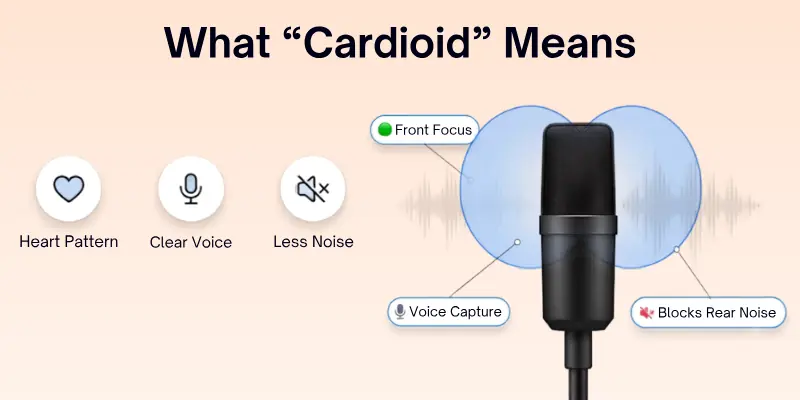
This heart-shaped pattern makes cardioid mics perfect for singing, podcasting, or recording in noisy rooms. It works automatically, so you don’t need to worry about adjusting it—just aim and speak, and the mic does the rest.
Common Examples of Cardioid Microphones
When it comes to cardioid microphones, some models are very popular because they work well for beginners and professionals alike.
- Shure SM58 – A classic dynamic cardioid mic, great for singing and live performances.
- Audio-Technica AT2020 – A condenser cardioid mic that is perfect for home studios and podcasts.
- Rode NT1-A – Another condenser mic, known for its clear sound and low background noise.
- Blue Yeti (Cardioid mode) – A USB mic that works well for streaming, voiceovers, and online meetings.
These mics are easy to use and provide clear, professional sound. Choosing one depends on your recording style and the environment you work in.

How a Cardioid Microphone Picks Up Sound
Friends, let’s see how a cardioid microphone actually hears sound. The mic listens mostly to the front. Sounds from the sides are quieter, and sounds from the back are barely picked up at all.
This happens because of the mic’s special shape and design. The front of the mic is the “sweet spot” for your voice or instrument. That’s why your recordings sound clear and clean, even if there’s noise around you.
In simple words, the mic focuses on what you want it to hear and ignores the rest. So, just point it toward your voice, and it will pick up the sound you want while cutting out background noise automatically.
Cardioid Microphone Parts
Now let’s talk about the main parts of a cardioid microphone. Even if you’re new, it’s easy to understand.
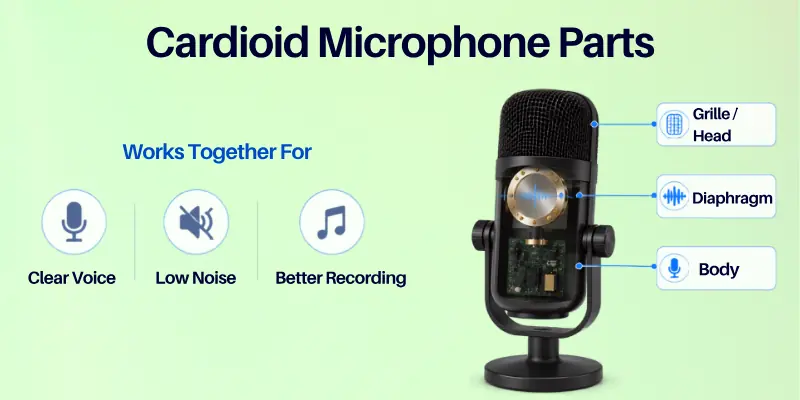
- Diaphragm: This is the thin part inside the mic that moves when sound hits it. It catches the vibrations of your voice or instrument.
- Body: The main shell of the mic. It protects the diaphragm and holds all the electronics together.
- Grille/Head: The metal cover on top. It stops dust and loud pops from hurting the diaphragm.
All these parts work together to make sure your voice is clear and the background noise is low. That’s why cardioid mics are perfect for singing, podcasting, and recording at home.
Types of Cardioid Microphones
Cardioid microphones come in different types, each made for a specific purpose. Choosing the right one makes a big difference in your recordings.
- Dynamic Cardioid Microphones: These are strong and durable. They are great for live performances and loud sounds.
- Condenser Cardioid Microphones: These are more sensitive and pick up small details. Perfect for studios, singing, and podcasts.
- Ribbon Cardioid Microphones: These are less common but give a warm, natural sound. Often used for instruments and vocals in professional studios.
Each type works with the same heart-shaped pickup pattern, but your choice depends on where and how you want to use it.
Benefits of Cardioid Microphones
Guys, using a cardioid microphone has many advantages. That’s why it’s so popular for singing, podcasting, and online recording.
- Clear sound: It focuses on your voice and reduces unwanted noise from the sides and back.
- Reduces background noise: Sounds like fans, traffic, or other people don’t mess up your recording.
- Easy to use: Beginners can get professional-sounding results without complicated setups.
- Versatile: Works well for singing, speaking, instruments, and streaming.
In short, cardioid mics make your recordings sound sharp, clean, and professional, even if your room isn’t perfectly quiet.

Where People Use Cardioid Mics
Friends, cardioid microphones are very popular because they work in many places. They help you get a clear sound almost anywhere.
- Live music: Singers and musicians use them on stage to focus on their voice or instrument.
- Podcasting and voiceovers: They make your voice sound clear without picking up room noise.
- Home studios: Perfect for recording at home, even if there’s background noise.
- Streaming and online meetings: Your voice comes through clearly, and unwanted sounds are minimized.
Basically, a cardioid mic is great for anyone who wants professional-quality sound without a lot of hassle. Just point it at your voice, and it does the rest!
Tips to Use Your Cardioid Microphone Well
Getting the best sound from a cardioid microphone is easier than you think. A few small steps can make a big difference.
- Point the mic toward your voice: The front of the mic picks up sound best, so always face it toward your mouth or instrument.
- Keep a good distance: About 6–12 inches away works well. Too close can cause popping sounds; too far can make your voice quiet.
- Reduce background noise: Turn off fans, move away from noisy areas, or use a simple pop filter for cleaner recordings.
- Speak or sing steadily: Consistent volume helps the mic capture clear sound without distortion.
Following these tips, even beginners can get recordings that sound professional and crisp without complicated setups.
Conclusion
Now you know what is a cardioid microphone and why it’s so popular. It focuses on sound from the front, reduces background noise, and makes recordings clear and professional.
Whether you’re singing, podcasting, streaming, or recording at home, a cardioid mic can help your voice stand out. In this blog post, we explained the types, main features, benefits, and tips for using them effectively.
Pick the right cardioid microphone, follow the simple tips, and you’ll be ready to create crisp, clear recordings that sound great to your audience.
Common FAQs
If you want to know more about cardioid microphones, check out these FAQs. We’ll explain how they work, why they’re popular, and tips for using them:
A cardioid microphone is used for recording sound from one main direction. It focuses on the voice or instrument in front of it and reduces unwanted noise from other directions.
Common uses include:
- Podcast recording
- Singing and music performances
- Voiceovers
- Streaming and gaming
- Online meetings
It is a popular choice for people who want clear audio without capturing too much background noise.
A cardioid microphone pattern describes how a microphone picks up sound. It captures the strongest audio from the front and reduces sound from the back.
This pattern looks like a heart shape, which is why it gets the name “cardioid.” It helps users record a main sound source clearly while lowering unwanted background sounds.
The cardioid microphone definition refers to a microphone that uses a heart-shaped sound pickup design. It mainly listens to sounds coming from the front area.
This design helps singers, speakers, and content creators get cleaner recordings because the microphone ignores many sounds coming from behind it.
People use cardioid microphones because they provide focused and clear sound. They work well when you want to record one person or one instrument at a time.
Benefits include:
- Less background noise
- Clear voice recording
- Better sound control
- Easy setup for beginners
These features make them useful for both home and professional recording.
A cardioid microphone reduces background noise by focusing on sound from the front while lowering sounds from the sides and back.
For example, if a fan runs behind the microphone, it will pick up less of that noise. However, the microphone still needs proper placement to get the best results.
A cardioid microphone focuses on sound from the front, while an omnidirectional microphone captures sound from all directions.
The main differences are:
- Cardioid microphones are better for single speakers.
- Omnidirectional microphones are better for group conversations.
- Cardioid microphones reduce more background noise.
- Omnidirectional microphones capture a wider sound area.
Your choice depends on the type of recording you want to make.
Yes, a cardioid microphone is a good choice for beginners because it is simple to use and works well in normal rooms.
Beginners can use it for:
- Recording YouTube videos
- Starting podcasts
- Online classes
- Voice practice
- Gaming streams
You only need to place the microphone correctly and speak toward the front side.
Place the microphone in front of your mouth or instrument and keep a small distance for clear audio.
Follow these simple tips:
- Keep the microphone about 6 to 12 inches away.
- Point the front side toward your voice.
- Avoid placing noise sources behind you.
- Use a quiet area when recording.
Correct positioning helps you get clean and professional-sounding results.


- Be Respectful
- Stay Relevant
- Stay Positive
- True Feedback
- Encourage Discussion
- Avoid Spamming
- No Fake News
- Don't Copy-Paste
- No Personal Attacks
- Be Respectful
- Stay Relevant
- Stay Positive
- True Feedback
- Encourage Discussion
- Avoid Spamming
- No Fake News
- Don't Copy-Paste
- No Personal Attacks