
What is Speaker Impedance: A Complete Guide in 2026
Speakers bring music, movies, and games to life, but many people overlook a key factor: speaker impedance.
This hidden number affects how your speakers connect with amplifiers and how well they perform. Understanding it can prevent poor sound, distortion, or even damage to your equipment.
In this blog post, you’ll learn what speaker impedance really means, why it matters for every audio setup, and practical tips to match speakers with your devices.
By the end, you’ll confidently choose speakers that sound great and work safely.
What is Speaker Impedance?
Speaker impedance is the amount of resistance a speaker gives to the electrical signal coming from an amplifier. It shows how difficult or easy it is for an electric current to pass through the speaker.
Every speaker has a fixed impedance value. You usually see it written in ohms (Ω). This value tells you how the speaker will behave when connected to an amplifier.
Common impedance values include:
- 4 ohms
- 6 ohms
- 8 ohms
- 16 ohms
Inside the speaker, there is a coil called the voice coil. When electrical current enters this coil, it creates movement that produces sound. The impedance comes from this internal resistance to current flow.
A key point is that impedance is not constant in all situations. It changes slightly depending on the sound frequency being played. However, speaker manufacturers give an average value so users can match equipment safely.
The impedance value is important because it decides how much load the speaker puts on the amplifier. This directly affects how the system performs.
How Speaker Impedance Works
Speaker impedance works through the way electrical energy moves inside a speaker system. It mainly depends on how the amplifier sends power and how the speaker reacts to it.
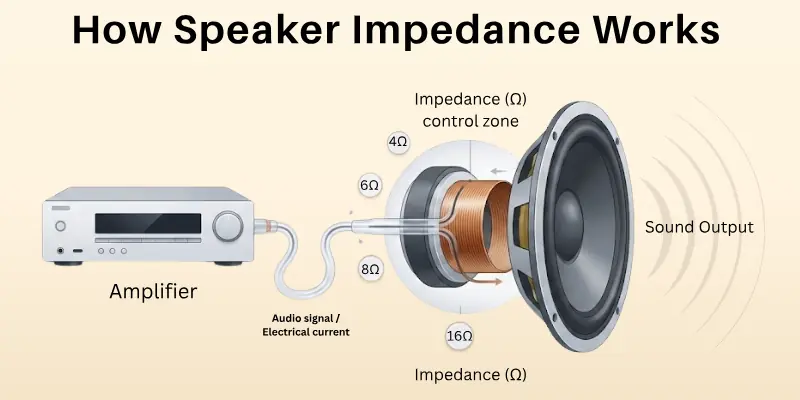
Here is the step-by-step process:
- The amplifier sends an audio signal as an electrical current
- The current enters the speaker’s voice coil
- The coil resists the flow of current based on its impedance value
- This resistance controls how much current can pass at a time
- The coil converts electrical energy into mechanical movement
- The movement pushes air and creates sound waves
Inside this process, impedance decides how much load the amplifier must handle at any moment.
Key technical points:
- Impedance varies slightly with frequency changes in audio signals
- Low-frequency sounds and high-frequency sounds can create different resistance levels
- Manufacturers use a single rated value to represent the average behaviour
- The amplifier must stay within this rated range to avoid strain
Impedance also affects current demand:
- Lower impedance allows more current flow
- Higher impedance limits current flow
- The current level directly impacts how much power the speaker receives
This entire interaction between amplifier output and speaker resistance is what creates controlled sound output in any audio system.
Common Speaker Impedance Ratings Explained
Speaker impedance comes in a few standard values. Each value works best in different audio setups:
4 Ohm Speakers
- Draw more current from the amplifier
- Produce higher output at the same power level
- Common in car audio systems
- Require amplifiers that support low impedance loads
- Can stress weak amplifiers if not matched properly
6 Ohm Speakers
- Sit between the low and standard impedance range
- Used in some home audio systems
- Offer a balance between power use and safety
- Not as widely available as 4 ohm or 8 ohm types
8 Ohm Speakers
- Most common standard for home audio
- Draw a moderate current from the amplifier
- Works well with a wide range of amplifiers
- Preferred for stable and safe performance
- Often used in TVs, home theaters, and bookshelf speakers
16 Ohm Speakers
- Used in specific professional or multi-speaker setups
- Draw less current compared to lower impedance speakers
- Allow multiple speakers to connect safely in larger systems
- Less common in regular home use

Low vs High Impedance Speakers
Speaker impedance values fall into two broad groups: low impedance and high impedance. Each type affects the audio system in a different way:
1. Low Impedance Speakers
Low impedance speakers usually have ratings such as:
- 4 ohms
- 6 ohms
Characteristics of Low Impedance Speakers
- Allow more electrical current to pass through the circuit
- Place a heavier load on the amplifier
- Need amplifiers designed for higher current delivery
- Often used where strong output is important
Common Uses
- Car audio systems
- Powered speaker setups
- High-output entertainment systems
Advantages
- Can make better use of available amplifier power
- Suitable for systems that need higher volume levels
- Popular in performance-focused audio setups
Limitations
- Increase amplifier workload
- Generate more heat in some systems
- Require careful equipment matching
2. High Impedance Speakers
High impedance speakers commonly have ratings such as:
- 8 ohms
- 16 ohms
Characteristics of High Impedance Speakers
- Restrict current flow more than low impedance models
- Create a lighter load for the amplifier
- Work comfortably with many consumer amplifiers
- Support stable long-term operation
Common Uses
- Home theater systems
- Stereo systems
- Bookshelf speakers
- Professional speaker networks
Advantages
- Easier on amplifier components
- Reduce the risk of overload
- Compatible with many audio receivers
- Useful in systems with multiple speaker connections
Limitations
- May produce less output when compared under identical conditions
- It can require more amplifier voltage to reach similar listening levels
Quick Comparison
Here is the table of differences between low and high impedance:
| Feature | Low Impedance | High Impedance |
| Current Demand | Higher | Lower |
| Amplifier Load | Heavier | Lighter |
| System Stress | More | Less |
| Home Audio Compatibility | Moderate | Excellent |
| Multi-Speaker Installations | Less Flexible | More Flexible |
Speaker Impedance and Amplifier Matching
Speaker impedance and amplifier matching are closely connected. An amplifier is designed to work with a specific impedance range, and the speaker must fall within that range for the system to operate properly. When both components match, power flows efficiently, sound remains stable, and the equipment performs as expected.
Before connecting any speaker, it is important to check whether its impedance is compatible with the amplifier:
Why Speaker and Amplifier Matching Matters
- Helps the amplifier deliver power efficiently
- Keeps the audio system operating within safe limits
- Supports stable performance during long listening sessions
- Reduces unnecessary stress on internal components
- Improves overall system reliability
How to Check Compatibility
- Read the impedance rating on the speaker
- Check the amplifier’s supported impedance range
- Review the user manual or product specifications
- Confirm compatibility before making any connections
Benefits of a Proper Match
- Balanced power distribution
- Consistent audio output
- Better system efficiency
- Normal operating temperatures
- Longer equipment lifespan
Common Matching Examples
- A 4–8 ohm amplifier can usually support 4-ohm, 6-ohm, and 8-ohm speakers
- An 8-ohm speaker often works well with most home audio receivers
- Professional systems may use different impedance combinations based on system design
Things to Consider When Using Multiple Speakers
- Total impedance changes when speakers are wired together
- Series wiring increases total impedance
- Parallel wiring decreases total impedance
- The final impedance must remain within the amplifier’s supported range
Best Practices
- Always verify specifications before installation
- Follow manufacturer recommendations
- Calculate total impedance in multi-speaker setups
- Avoid connecting speakers based on guesswork
- Test new systems at moderate volume levels first
A properly matched amplifier and speaker create a safe, efficient, and dependable audio system. Taking a few minutes to check impedance ratings can help prevent performance issues and protect your equipment.

Series vs Parallel Speaker Connection
When connecting multiple speakers to one amplifier, the wiring method affects the total impedance of the system. The two most common methods are series wiring and parallel wiring. Understanding the difference helps you build a safer and more efficient audio setup.
Series Speaker Connection
- Connects speakers one after another in a single path
- Increases total impedance in the circuit
- Places a lighter load on the amplifier
- Helps reduce the risk of amplifier overload
- Often used when a higher impedance is needed
- Can result in lower overall output compared to parallel wiring
Parallel Speaker Connection
- Connects speakers side by side on the same amplifier channel
- Decreases total impedance in the circuit
- Allows more current to flow from the amplifier
- Can increase the system’s output capability
- Requires careful impedance calculations
- May overload an amplifier if the total impedance becomes too low
Key Things to Remember
- Series wiring = Higher impedance
- Parallel wiring = Lower impedance
- Always calculate the final impedance before connecting speakers
- Keep the total load within the amplifier’s supported range
Common Mistakes People Make
Many beginners focus only on speaker size or power ratings and overlook impedance. Small mistakes can affect system performance and sometimes lead to equipment problems.
Common Speaker Impedance Mistakes
- Ignoring impedance ratings before buying speakers
- Connecting speakers without checking amplifier compatibility
- Mixing different impedance speakers on the same channel
- Assuming all speakers work with every amplifier
- Using multiple speakers without calculating the total impedance
- Confusing power ratings with impedance ratings
- Following online wiring diagrams without verification
- Overloading an amplifier with a low-impedance setup
- Upgrading speakers without checking system requirements
- Skipping the manufacturer’s specifications
Why These Mistakes Matter
- Can reduce system efficiency
- May cause overheating issues
- Can lead to unstable performance
- May shorten equipment lifespan
- Often results in poor audio output
Tips to Choose the Right Speaker Impedance
Choosing the right speaker impedance becomes much easier when you understand your amplifier’s requirements. The goal is to create a setup that delivers reliable performance while staying within safe operating limits.
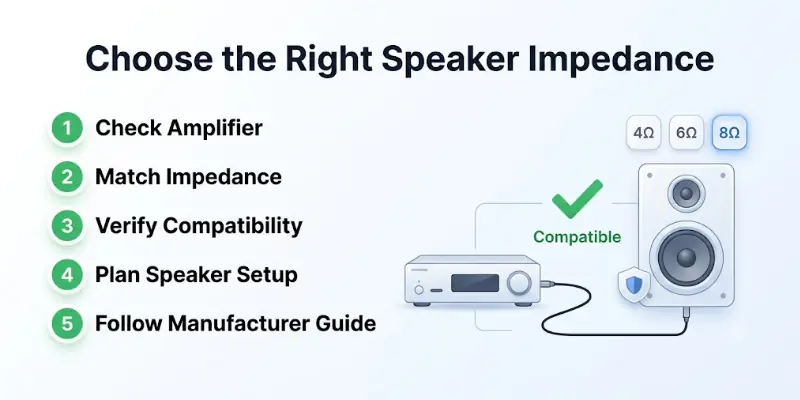
Practical Tips for Choosing Speaker Impedance
- Check your amplifier specifications first
- Match the speaker’s impedance to the amplifier’s supported range
- Choose 8-ohm speakers for most home audio systems
- Verify compatibility before purchasing new equipment
- Consider the number of speakers in your setup
- Calculate the total impedance when using multiple speakers
- Follow the manufacturer’s recommendations
- Select speakers based on the intended application
- Leave room for future system upgrades
- Prioritize compatibility over maximum output
For Different Types of Audio Systems
- Home audio systems: 8-ohm speakers are often the easiest choice
- Car audio systems: 4-ohm speakers are commonly used
- Professional systems: Impedance depends on the system design and speaker count
- Multi-speaker installations: Careful impedance planning is essential
Conclusion
In this article, we covered what is speaker impedance, how it works, common impedance ratings, and how to match speakers with amplifiers in a safe and simple way.
The key takeaway is simple: always check your speaker and amplifier specifications before connecting anything. This small step makes a big difference. It helps you avoid sound issues, protects your equipment from damage, and keeps your system running smoothly.
If you want better audio performance, focus on correct matching instead of just power or volume. When impedance is set right, your system delivers clear, stable, and reliable sound every time.
Take a moment today to review your setup. Make sure everything is properly matched, and you will enjoy safer equipment and better sound quality for a long time.
Popular FAQs
Here are the most common FAQs with simple answers to help you choose and use your speakers confidently:
There is no single “best” speaker impedance for everyone. The best choice depends on your amplifier and your use case. Most home audio systems work well with 8-ohm speakers because they offer stable performance and easy compatibility.
For car audio, 4-ohm speakers are common because they can draw more power and produce louder output. The best impedance is always the one that matches your amplifier’s supported range.
4 ohms is not better or worse than 8 ohms. Both work in different situations.
- 4 ohm speakers pull more current from the amplifier
- 8 ohm speakers are easier for amplifiers to handle
In simple speaker impedance meaning, 4 ohms is about the power demand, not sound quality. The real “better” option depends on your system design.
Yes, in many cases you can use an 8-ohm speaker with a 4-ohm rated amplifier, but it depends on the amplifier design.
- The amplifier will run with a lighter load
- You may get slightly lower power output
- The system usually stays safe
From a basic speaker impedance definition, higher impedance reduces current flow, which is generally safer for the amplifier.
Speaker impedance does not directly improve or reduce sound quality.
However, it affects system behaviour:
- It controls how much power reaches the speaker
- It influences loudness levels
- It affects amplifier stability
In simple understanding speaker impedance, sound quality depends more on speaker design than impedance value.
You can measure speaker impedance using simple tools or methods:
- Check the label on the speaker body
- Look at the product manual or box
- Use a multimeter (for basic checking)
- Read online product specifications
This helps you confirm the correct speaker impedance explained for safe amplifier matching.
If impedance does not match the amplifier, problems can appear.
If impedance is too low:
- The amplifier draws too much current
- The system may overheat
- Protection mode may activate
If impedance is too high:
- Lower sound output
- Reduced power efficiency
- Weak performance in large rooms
This shows clearly what speaker impedance means in real system behaviour and why matching is important.
Yes, but only slightly and usually due to damage or wear.
- Voice coil heating can affect resistance
- Physical damage can change readings
- Normal use does not change it much
In simple terms, speaker impedance meaning stays mostly stable unless the speaker is damaged or heavily aged.
Speaker impedance changes with frequency because internal components react differently to different sound signals.
- Low frequencies can lower or raise resistance
- High frequencies behave differently in the coil
- The value is never perfectly fixed
This is a key part of speaker impedance explanation and shows why manufacturers give an average ohm rating instead of a single fixed value.


- Be Respectful
- Stay Relevant
- Stay Positive
- True Feedback
- Encourage Discussion
- Avoid Spamming
- No Fake News
- Don't Copy-Paste
- No Personal Attacks
- Be Respectful
- Stay Relevant
- Stay Positive
- True Feedback
- Encourage Discussion
- Avoid Spamming
- No Fake News
- Don't Copy-Paste
- No Personal Attacks