
Active vs Passive Speakers Guide: Easy Comparison & Best Choice
Choosing the right speaker can completely change your listening experience. If you understand the active vs passive speakers, you can avoid wasting money, reduce setup problems, and get the sound quality you truly want.
Many people buy speakers without knowing how they work. Later, they struggle with extra equipment, confusing cables, or sound that doesn’t meet their expectations. A simple understanding now can save you time, money, and frustration.
In this guide, you’ll learn:
- What active speakers are
- What passive speakers are
- The key differences between them
- Their pros and cons
- Which option suits your needs best
Whether you’re setting up a home theatre, upgrading your desktop audio, building a studio, or simply buying speakers for music, this guide will help you make a confident and smart decision.
What are Active Speakers?
Active speakers are speakers with a built-in amplifier. They do not need a separate amplifier or receiver to produce sound. You can connect them directly to devices like a laptop, TV, phone, or audio player. Many people like active speakers because they are simple and easy to use.
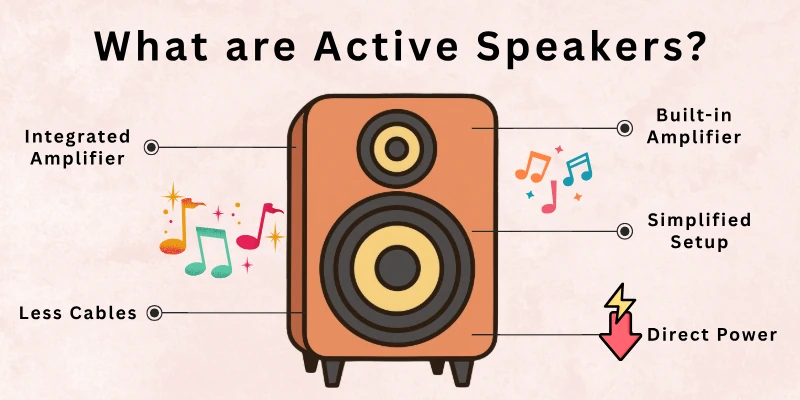
These speakers control sound inside the speaker system itself. This setup helps improve sound balance and performance. Active speakers also reduce extra wiring and save space. They work well for home use, gaming, music listening, and small studios.
Examples of Active Speakers
- Bluetooth speakers
- Computer speakers
- Studio monitor speakers
- Smart speakers
- Portable party speakers
What are Passive Speakers?
Passive speakers are speakers that need an external amplifier to work. They cannot produce sound on their own because they do not have a built-in amplifier. The amplifier sends power and audio signals to the speakers. Many home theatre systems and large sound setups use passive speakers.

These speakers give users more control over sound quality and performance. People can choose separate amplifiers, receivers, and audio equipment based on their needs. Passive speakers are popular in professional audio systems because they are flexible and easy to upgrade over time.
Examples of Passive Speakers
- Home theater speakers
- Bookshelf speakers
- Floor-standing speakers
- PA system speakers
- Professional concert speakers
Comparison Table of Passive vs Active Speakers
Here is a quick comparison of the difference between active and passive speakers. This table helps you understand their features, setup, sound control, and overall usage more easily.
| Feature | Active Speakers | Passive Speakers |
| Amplifier | Built-in amplifier | Needs an external amplifier |
| Setup Process | Simple and quick | More complex setup |
| Number of Cables | Fewer cables | More cables required |
| Sound Control | Easy built-in controls | Depends on external equipment |
| Portability | Easy to carry and move | Less portable in large setups |
| Upgrade Options | Limited upgrades | Easy to upgrade parts |
| Space Requirement | Takes less space | Needs more space |
| Best For | Beginners and home users | Professionals and large systems |
| Maintenance | Easier maintenance | More equipment to manage |
| Sound Customization | Limited sound tuning | Better sound customization |
| Initial Cost | Higher starting price | Flexible starting cost |
| Audio Performance | Balanced sound system | More powerful sound control |
Differences between Features of Active Speakers vs Passive Speakers
Below are the main features that help you clearly understand how passive and active speakers differ in real use and daily setup.
These points will make it easier for you to compare both types and choose the right one.
- Built-In vs External Amplifier
- Easy vs Complex Setup
- Power Source Dependency
- Portability And Size
- Connectivity Options
- Basic Sound Control
- Sound Customization Level
- Upgrade Flexibility
- Maintenance Needs
- Cost And Budget Impact
- Performance In Different Spaces
- Equipment Dependency
Let’s break down each feature in a simple way.
1. Built-In vs External Amplifier
Here is how the amplifier setup changes the working style of both speaker types:
Active speakers come with a built-in amplifier inside the speaker box. You do not need extra equipment to power them. You can simply connect them and start using them easily.
Passive speakers do not have a built-in amplifier. They need an external amplifier or receiver to work. You must connect both devices before you can hear sound.
2. Easy vs Complex Setup
Here is how the setup process differs when you install both speaker types:
Active speakers are very easy to set up. You just plug them into the power and connect your device. Most people can set them up within minutes.
Passive speakers take more time to set up. You need an amplifier, speaker wires, and correct connections. Beginners may find it a little confusing at first.
3. Power Source Dependency
Here is how both speaker types depend on power to function:
Active speakers need direct power because the amplifier is inside them. They must always stay connected to electricity. Without power, they cannot work.
Passive speakers do not use direct power themselves. The external amplifier takes the power supply. This makes the speaker units lighter and simpler.
4. Portability And Size
Here is how portability changes based on speaker design and internal parts:
Active speakers are slightly heavier because they include an amplifier inside. Still, they are easy to move for small setups. Many are designed for portable use.
Passive speakers are usually lighter as individual units. But the full system becomes bulky because of extra equipment. This reduces overall portability.
5. Connectivity Options
Here is how connection methods differ between the two speaker systems:
Active speakers often support modern connections like Bluetooth, AUX, and USB. They are easy to connect with phones, laptops, and TVs. Many models offer wireless options.
Passive speakers rely on wired connections only. You connect them to an amplifier using speaker cables. They do not support direct device connections.
6. Basic Sound Control
Here is how simple sound adjustments work in both speaker types:
Active speakers usually have built-in volume and tone controls. You can adjust the sound directly on the speaker. This makes basic control very easy.
Passive speakers depend on the amplifier for sound control. You adjust volume and settings from the external device. The speakers themselves have no controls.
7. Sound Customization Level
Here is how much control you get over sound quality in each system:
Active speakers offer limited sound customization. They are tuned for ready-to-use sound quality. This works well for casual listening.
Passive speakers offer more advanced sound control. You can change amplifiers and audio settings for better tuning. This is ideal for professionals.
8. Upgrade Flexibility
Here is how easy it is to improve or upgrade each speaker system:
Active speakers have limited upgrade options. Most parts are fixed inside the system. You often need to replace the whole unit for upgrades.
Passive speakers are very flexible for upgrades. You can change the amplifier or add new speakers. This makes them long-term friendly.
9. Maintenance Needs
Here is how maintenance and repair needs differ in both speaker types:
Active speakers need less maintenance in normal use. But if one part fails, repair can be complex. Everything is built into one system.
Passive speakers are easier to repair in parts. You can fix or replace one component at a time. This makes maintenance more flexible.
10. Cost And Budget Impact
Here is how cost planning changes when choosing between the two speaker types:
Active speakers often have a higher starting price. But you do not need to buy extra equipment. This keeps the setup simple.
Passive speakers may look cheaper at first. But you must buy an amplifier and cables separately. This can increase the total cost.

11. Performance In Different Spaces
Here is how both speaker types perform in small and large environments:
Active speakers work best in small to medium rooms. They give balanced sound without extra setup. They are ideal for home use.
Passive speakers perform better in large spaces. They can handle powerful sound systems. They are used in events and halls.
12. Equipment Dependency
Here is how much extra equipment each speaker type needs to function properly:
Active speakers need very little extra equipment. You can use them with just a power source and an audio device. This keeps things simple.
Passive speakers depend fully on external equipment. You need an amplifier and proper wiring. Without them, they cannot produce sound.
Pros and Cons of Active and Passive Speakers
Let’s understand the real strengths and weaknesses of both active and passive speakers in a simple way. This will help you decide which one fits your needs better.
Advantages of Active Speakers
Active speakers come with several user-friendly benefits that make them great for quick and simple setups:
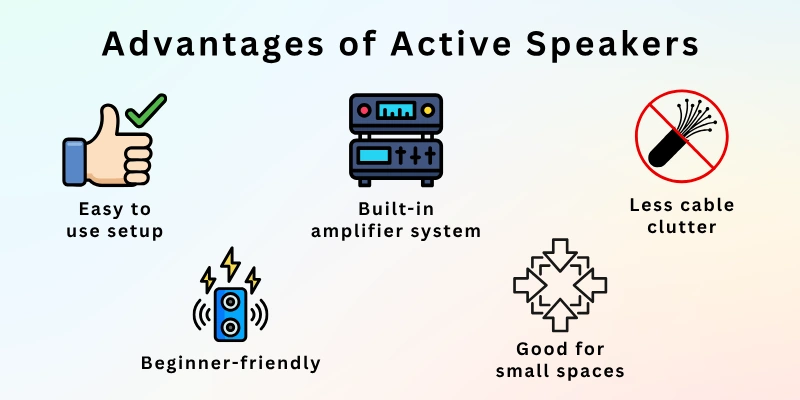
- Easy to use setup: You can connect active speakers directly to your device without extra equipment. This saves time and effort, especially for beginners.
- Built-in amplifier system: The amplifier is already inside the speaker. You do not need to buy or connect an external amplifier.
- Less cable clutter: Active speakers use fewer wires. This keeps your setup clean and simple.
- Good for small spaces: They work very well in rooms, home setups, and small studios. You get balanced sound without complex installation.
- Beginner-friendly: Anyone can use them easily without technical knowledge. Just plug and play.
Disadvantages of Active Speakers
While active speakers are easy to use, they also come with a few limits you should consider:
- Limited upgrade options: You cannot easily upgrade parts like the amplifier. Most systems are fixed.
- Higher repair difficulty: If one internal part fails, repair can be more complex and costly.
- Less flexibility in sound tuning: They offer basic sound control only. Advanced audio tuning is limited.
- Depend on built-in system: If the internal amplifier has an issue, the whole speaker system can stop working.
Advantages of Passive Speakers
Passive speakers are widely used in professional setups because they offer more control and flexibility:
- Flexible upgrade options: You can change amplifiers, speakers, and other equipment easily. This helps improve sound over time.
- Better sound customization: You get full control over sound settings using external audio equipment.
- Ideal for large systems: They work well in halls, events, and professional setups where powerful sound is needed.
- Easy to repair in parts: You can fix or replace one part without replacing the whole system.
- Long-term value: They stay useful for many years because you can upgrade them anytime.
Disadvantages of Passive Speakers
Even though passive speakers offer flexibility, they require more effort to set up and use:
- Complex setup process: You need an amplifier, wires, and correct connections before use. This can be difficult for beginners.
- More equipment required: You must buy extra devices like an amplifier, which increases setup needs.
- More cables and space are needed: The system becomes less tidy because of multiple wires and devices.
- Higher learning curve: You need basic audio knowledge to set everything correctly.
- Not plug-and-play: Unlike active speakers, they cannot work directly without external support.
Who Should Use Active Speakers?
Active speakers fit best for people who want a simple and quick audio setup without technical steps. They work well for users who prefer easy plug-and-play systems and do not want extra equipment like amplifiers.
These speakers are also a great choice for everyday users who need clear sound for music, videos, or casual work. They save time, space, and effort, making them ideal for small setups and beginner-friendly use.
Active speakers are best for:
- Home users: Great for listening to music, watching movies, and daily entertainment.
- Beginners: Easy setup makes them perfect for people with no technical audio knowledge.
- Students and office users: Useful for online classes, meetings, and computer work.
- Small rooms and personal spaces: Work well in bedrooms, study rooms, and small offices.
- Portable setups: Ideal for users who move their speakers often or need a simple setup anywhere.
Who Should Use Passive Speakers?
Passive speakers are a great choice for people who want more control over their sound system. They work best when you are ready to use extra equipment like an amplifier and want a more flexible audio setup.
These speakers suit users who need powerful sound for large spaces or professional work. They also fit people who like to upgrade their system over time and fine-tune sound quality based on their needs.
Passive speakers are best for:
- Audio professionals: Ideal for studios, sound engineers, and music production work.
- Large events and venues: Perfect for halls, concerts, and outdoor setups that need strong sound.
- Home theatre users: Great for building a full cinema-like sound system at home.
- Advanced users: Best for people who understand audio equipment and want full control.
- Upgrade-focused users: Useful for those who want to improve or expand their sound system over time.
Tips for Choosing Passive or Active Speakers
Choosing the right speaker depends on your needs, space, and how much control you want over your sound system.
These simple tips will help you make a smart decision without confusion:
- Understand your purpose first: Think about why you need speakers. For music, movies, or office use, active speakers often work best. For events or studios, passive speakers are better.
- Check your technical comfort level: If you want an easy setup, go for active speakers. If you are comfortable handling an amplifier and cables, passive speakers are a better choice.
- Consider your room size: Small rooms work well with active speakers. Large spaces need passive speakers for stronger sound coverage.
- Look at your budget carefully: Active speakers may cost more at the start. Passive speakers may look cheaper, but need extra equipment.
- Think about future upgrades: If you want to upgrade your system later, passive speakers give more flexibility. Active speakers are more fixed.
- Check connectivity needs: If you need Bluetooth or plug-and-play use, active speakers are easier. For wired professional setups, passive speakers fit better.
- Plan your setup space: Active speakers need less space and fewer wires. Passive speakers need more room for the amplifier and cables.
Common Mistakes to Avoid When Choosing Active or Passive Speakers
Many people make simple mistakes when buying speakers. These mistakes can lead to poor sound quality or a setup that does not fit their needs.
Here are the most common ones you should avoid:
- Ignoring your actual use case: Do not buy speakers without knowing your purpose. Active speakers suit simple home use, while passive speakers fit professional setups.
- Forgetting amplifier requirements: Many people buy passive speakers without an amplifier. This causes extra cost and confusion during setup.
- Choosing based only on price: A low price does not always mean better value. Always check full system needs, not just speaker cost.
- Not checking room size: Small rooms do not need heavy systems. Large rooms need stronger sound, so speaker type matters a lot.
- Overlooking connectivity options: Some users forget to check Bluetooth, AUX, or wired support. This can limit how you use your speakers.
- Ignoring upgrade plans: If you plan to upgrade later, passive speakers are better. Many people choose active speakers and feel stuck later.
- Skipping sound quality testing: Always test or review sound quality before buying. Different speakers sound different even in the same price range.
- Not planning cable and space setup: Passive systems need more cables and space. Many users underestimate this and face clutter later.
Conclusion
In this article, we’ve covered active vs passive speakers in detail. Personally, I recommend choosing active speakers if you want a simple, plug-and-play setup with consistent sound, and passive speakers if you enjoy customizing your system and upgrading components over time.
Take your needs and space into account, and pick the option that fits your lifestyle best. Start exploring your ideal speaker setup today and enjoy better sound tomorrow!
FAQs About Active vs Passive Speakers
Here are answers to some common questions about the difference between active and passive speakers to help you make the right choice:
There is no single winner. Both types work well, but in different situations. Active speakers are better for simple use and quick setup. Passive speakers are better for control and large sound systems. The best choice depends on your needs and space.
Passive speakers can sound better when you use a high-quality amplifier. They give more control over sound tuning and upgrades. This helps improve audio performance. But active speakers also give very clear and balanced sound for daily use.
Active speakers are much easier to set up:
- You just plug them into the power
- Connect your device
- Start using them in minutes
Passive speakers need an amplifier and proper wiring, so setup takes more time.
Yes, active speakers are a good choice for gaming. They give clear sound and an easy plug-and-play setup. You can connect them quickly to a PC or console. They also save desk space, which is helpful for gamers.
Yes, passive speakers always need an external amplifier. Without an amplifier, they cannot produce sound. The amplifier powers and controls the audio output. This is a must for every passive speaker setup.
Both can last long if used properly. Passive speakers often last longer because you can replace parts.
Active speakers depend on internal systems, which can be harder to repair. Good care matters more than speaker type.
Yes, beginners can use them, but it may feel complex at first. They need basic knowledge of amplifiers and wiring. Once set up, they work very well. Active speakers are still easier for first-time users.
Active speakers are usually better for home use. They are easy to set up and need less space. You can use them for music, movies, and daily entertainment. Passive speakers are better for advanced home theatre systems.



- Be Respectful
- Stay Relevant
- Stay Positive
- True Feedback
- Encourage Discussion
- Avoid Spamming
- No Fake News
- Don't Copy-Paste
- No Personal Attacks
- Be Respectful
- Stay Relevant
- Stay Positive
- True Feedback
- Encourage Discussion
- Avoid Spamming
- No Fake News
- Don't Copy-Paste
- No Personal Attacks