
Wired vs Wireless Speakers: What’s the Difference?
Sound plays a big role in how we enjoy music, movies, and games, and wired vs wireless speakers both offer different experiences. Some people prefer strong wired connections, while others like the freedom of wireless audio.
In this article, we will explore how both work, what makes them different, and where each one performs best. You will also learn their pros, cons, and ideal users in a very simple way.
Let’s explore everything step by step and jump straight into it now!
What are Wired Speakers?
Wired speakers are audio devices that connect directly to a sound source using cables. You plug them into devices like computers, TVs, or amplifiers to play sound. They do not rely on Bluetooth or Wi-Fi for connection.
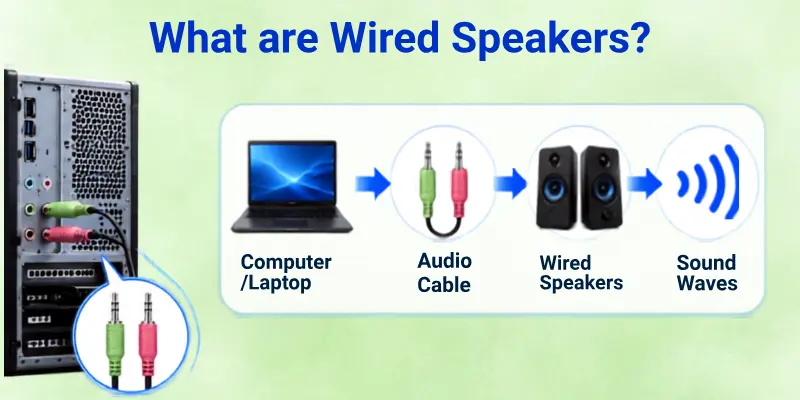
We use wired speakers when we want stable and clear sound without interruption. They work by sending audio signals through physical wires, which helps keep sound quality strong and consistent.
Common Uses of Wired Speakers
- Home theater systems for movies and TV shows
- Desktop computers for work, study, and gaming
- Music studios for clear and accurate sound monitoring
- Classrooms and meeting rooms for presentations and lectures
- Public address systems for announcements and events

What are Wireless Speakers?
Wireless speakers are audio devices that connect without cables. They use Bluetooth or Wi-Fi to receive sound from phones, laptops, or TVs. This makes them easy to use in daily life.
We can move wireless speakers easily because they do not need direct wires. They are popular for home use, travel, and outdoor listening. You just connect once and enjoy sound without messy cables.
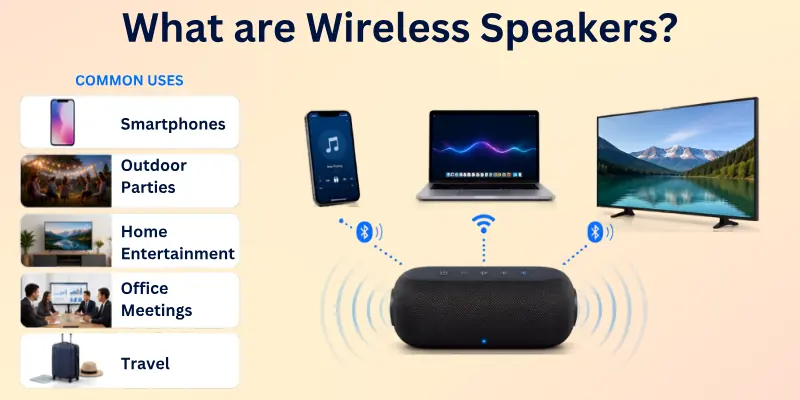
Common Uses of Wireless Speakers
- Playing music from smartphones and tablets
- Outdoor parties and small gatherings
- Home use for movies and entertainment
- Office spaces for calls and meetings
- Travel and portable audio listening
Comparison Table of Wired and Wireless Speakers
Here is a quick look at wired versus wireless speakers, so you can understand the main differences simply:
| Feature | Wired Speakers | Wireless Speakers |
| Connection | Uses cables | Uses Bluetooth or Wi-Fi |
| Sound Quality | Very stable and clear | Good, but it can vary |
| Setup | Needs wiring and placement | Quick and easy setup |
| Portability | Not easy to move | Easy to carry anywhere |
| Power Source | Often needs external power | Works on battery or charging |
| Audio Delay | Very low delay | Slight delay in some cases |
| Best For | Home theatres, studios, PCs | Travel, mobile use, casual listening |
| Maintenance | Low but cable care needed | Battery and charging care needed |
Features Comparison Between Wired and Wireless Speakers
To understand both speaker types better, let’s break down the key features one by one. This will help you clearly see how each option performs in real use.
Here is the list of features:
- Sound Quality
- Connection Method
- Setup Ease
- Portability Level
- Power Requirement
- Battery Performance (Wireless only)
- Audio Delay (Latency)
- Device Compatibility
- Build Quality & Durability
- Maintenance & Care
- Cost Effectiveness
Let’s break down each feature in a simple way.
1. Sound Quality
Let’s understand how both speaker types differ when it comes to sound clarity and performance:
Wired speakers deliver more stable and consistent sound because they use a direct cable connection. You get clear audio with strong bass and less distortion. They work well in studios and home theater setups where sound accuracy matters.
Wireless speakers also give good sound, but the quality can change based on signal strength. Sometimes you may notice small drops in clarity or compression. They are still great for daily music and casual listening.
2. Connection Method
Here is how the connection system works differently in both speaker types:
Wired speakers connect through physical cables like AUX, USB, or RCA. This direct link gives a stable and uninterrupted audio flow. You must stay close to the device because the cable limits movement.
Wireless speakers connect using Bluetooth or Wi-Fi. You can pair them quickly with phones, laptops, or TVs. This removes cable clutter and gives more freedom to move around.
3. Setup Ease
Let’s look at how easy or complex it is to set up each speaker type:
Wired speakers need a proper cable connection with the right ports. You may need to adjust wires and place the speaker carefully. It takes a bit more time, but it stays stable once set.
Wireless speakers are simple to set up. You just turn them on and pair them with your device. This makes them ideal for users who want quick and easy installation.
4. Portability Level
Now we will see how easy it is to move both speaker types from one place to another:
Wired speakers are less portable because they depend on cables and fixed setups. Moving them often means reconnecting everything again. They are better for permanent locations.
Wireless speakers are highly portable and easy to carry. You can move them anywhere without worrying about wires. This makes them perfect for travel and outdoor use.
5. Power Requirement
Here, we will compare how each speaker gets power to function:
Wired speakers usually need a constant power supply from an outlet or amplifier. They stay powered as long as they are plugged in. This makes them reliable for long use.
Wireless speakers often use rechargeable batteries. You need to charge them regularly. This gives flexibility but depends on battery life.
6. Battery Performance (Wireless Only)
Let’s focus on how battery usage affects wireless speaker performance:
Wired speakers do not use batteries, so this factor does not apply to them. They run directly on electrical power without interruptions. This makes them stable for long sessions.
Wireless speakers depend on battery backup. Some last a few hours, while others can run all day. You need to recharge them to keep using them.
7. Audio Delay (Latency)
Here is how both speakers handle sound timing and delay:
Wired speakers provide almost zero delay in audio output. Sound reaches instantly, which is important for gaming and video editing. This makes them highly accurate.
Wireless speakers can have a slight delay due to signal transfer. In most cases, it is not noticeable for casual use. But it may matter in gaming or professional work.
8. Device Compatibility
Now, let’s check how easily both speakers connect with different devices:
Wired speakers work with devices that support audio ports. You may need adapters for some modern devices. They are widely compatible but depend on physical ports.
Wireless speakers connect easily with most modern devices. Phones, laptops, and smart TVs support Bluetooth or Wi-Fi. This makes them more flexible for daily use.
9. Build Quality & Durability
Here we will compare how strong and long-lasting both speaker types are:
Wired speakers are usually built with strong materials for long-term use. However, cables can wear out or get damaged over time. Proper care increases their lifespan.
Wireless speakers are designed for portability, so they are often compact and lightweight. Their durability depends on the battery and internal components. They need careful handling during travel.
10. Maintenance & Care
Let’s understand how much effort each speaker type needs to stay in good condition:
Wired speakers need basic care like cable management and dust cleaning. Once installed, they require less frequent maintenance. The main focus is on protecting wires.
Wireless speakers need regular charging and battery care. You should also keep them updated and protected from drops. This ensures long-lasting performance.
11. Cost Effectiveness
Now we will compare how budget-friendly both speaker types are in the long run:
Wired speakers are usually more affordable and give strong value for money. They last long without extra battery costs. This makes them good for budget users.
Wireless speakers can be more expensive depending on features. You also need to consider battery life and charging needs. However, they offer more convenience and flexibility.
Pros and Cons of Wired and Wireless Speakers
Now, let’s look at the main advantages and disadvantages of both speaker types. This will help you quickly understand what works best for your needs.
Advantages of Wired Speakers
Let’s first understand why many people still prefer wired speakers for stable audio performance:
- Stable sound quality: Wired speakers give strong and consistent sound because they use a direct cable connection. You do not face signal drops or interference.
- Low audio delay: Sound comes instantly without delay. This makes them a good choice for gaming and video editing.
- Reliable performance: Once connected properly, wired speakers work without interruption for long hours.
- No battery needed: They do not depend on charging. You can use them continuously as long as power is available.
- Better for professional use: Many studios and sound setups use wired speakers for accurate audio output.
Disadvantages of Wired Speakers
Now, let’s look at some limits of wired speakers that may affect daily use:
- Limited movement: Cables restrict how far you can place the speakers.
- Cable management issues: Wires can become messy and hard to organize.
- Less portable: They are not easy to move from one place to another.
- Setup takes time: You need to connect cables properly before use.
- Space limitation: You must place them near power sources and devices.
Advantages of Wireless Speakers
Here are the main reasons why wireless speakers are popular in modern use:
- Easy portability: You can carry wireless speakers anywhere without worrying about wires.
- Quick setup: Just connect through Bluetooth or Wi-Fi and start using them.
- Clean and modern look: No cables make your space neat and organized.
- Works with many devices: Easily connects with phones, laptops, and smart TVs.
- Good for outdoor use: Perfect for travel, parties, and casual listening.
Disadvantages of Wireless Speakers
Let’s now understand the common issues users may face with wireless speakers:
- Battery dependence: You need to charge them regularly for continuous use.
- Possible connection issues: The signal may drop or weaken sometimes.
- Audio delay in some cases: Slight lag can appear during gaming or videos.
- Higher price range: Many wireless models cost more than wired options.
- Limited battery life: Usage time depends on battery capacity and charging cycles.

Tips for Choosing the Wireless or Wired Speakers
Before you buy a speaker, it helps to know what really matters for your daily use. These points will make your decision easier and more practical:
- Understand your main use: First, decide where you will use the speakers. For gaming or studio work, wired speakers work better. For travel or casual use, wireless speakers are a better choice.
- Check sound quality needs: If you want clear and stable sound, go for wired options. If you want decent sound with flexibility, wireless speakers can work well.
- Think about your space: In a fixed setup like a desk or TV room, wired speakers fit better. In flexible or small spaces, wireless speakers save space and reduce clutter.
- Look at battery life: For wireless speakers, always check how long the battery lasts. Longer battery life means fewer charging breaks.
- Check device compatibility: Make sure the speaker works with your phone, laptop, or TV. Wired speakers need proper ports, while wireless ones need Bluetooth or Wi-Fi support.
- Set your budget: Choose a speaker that matches your budget. Wired speakers are usually cheaper, while wireless ones may cost more but offer extra convenience.
Common Mistakes to Avoid When Buying Speakers
Before you choose a speaker, it helps to know what most people get wrong. These small mistakes can affect sound quality, comfort, and long-term use:
- Ignoring sound quality: Many people focus only on price or design. But sound quality is the most important factor for a good listening experience.
- Not checking compatibility: Some users forget to check if the speaker works with their phone, laptop, or TV. This can cause connection problems later.
- Choosing style over performance: A speaker may look good, but it may not give a strong sound. Always balance looks with performance.
- Overlooking usage needs: People sometimes buy wireless speakers for studio work or wired speakers for travel. Matching the speaker with your use is very important.
- Ignoring battery life (wireless): Low battery backup can create problems during long use. Always check how long the speaker can run.
- Not considering room size: A small speaker may not fill a large room with sound. Always match speaker power with your space.
Conlcusion
In this article, we’ve covered wired vs wireless speakers in detail, along with their features, differences, pros, cons, and real use cases.
I personally recommend wired speakers if you want stable sound for gaming, movies, or professional work.
If you need easy movement and simple use, wireless speakers are better for daily life. Both options work well depending on your needs.
Don’t skip the next part of the FAQs. I hope you will find something more interesting, so don’t miss it. If you miss it, you may lose something new.
Frequently Asked Questions About Wireless vs Wired Speakers
Here are a few important questions and answers related to wireless versus wired speakers:
Wired speakers are often better when you want a strong and stable sound performance. They give clear audio without signal drops or delay. This makes them a good choice for professional or home theatre use.
Wireless speakers are better when you want easy setup and portability. You can move them anywhere without cables. They are perfect for casual listening and modern smart devices.
Yes, wireless speakers can have a small audio delay in some cases. This happens because sound travels through Bluetooth or Wi-Fi signals. Most users do not notice it during normal music listening.
However, delay can matter in certain situations.
- Gaming may feel slightly out of sync
- Video editing may need accurate timing
- Low-quality Bluetooth devices may increase the delay
Both types can last a long time if used properly, but wired speakers often have a longer life. They do not depend on batteries, which reduces long-term wear. Good build quality can make them last for years.
Wireless speakers depend on batteries, which can weaken over time. Still, proper care helps extend their life. Avoid overcharging and protect them from drops.
Wireless speakers can be used for gaming, but they are not always the best choice. Some games may feel slightly delayed due to signal processing. This can affect fast reactions in competitive gaming.
For a better gaming experience, wired speakers are usually preferred.
- They give instant sound response
- They reduce audio lag
- They improve gameplay accuracy
Yes, wired speakers can connect to smartphones, but it depends on the phone’s ports. Many modern phones need an adapter to support wired audio connections. Once connected, they give stable and clear sound.
Some smartphones support direct AUX or USB connections. You just need the right cable or converter. This makes wired speakers still useful for mobile users.
Both speaker types work well at home, but the choice depends on your needs. Wired speakers are great for fixed setups like TVs and desktops. They give a strong and stable sound for long use.
Wireless speakers are better for flexible home use. You can move them from room to room easily. They also keep your space clean without wires.
Not always. Most wireless speakers use Bluetooth, which does not need internet connection. You just connect your device directly and play the sound.
However, some smart speakers use Wi-Fi. These may need the internet for streaming music or voice features. But basic playback still works without it.
Yes, wired speakers are usually cheaper than wireless speakers. They have simpler technology and do not include batteries or wireless modules. This makes them more budget-friendly.
Wireless speakers often cost more because of extra features. These include Bluetooth, Wi-Fi, and rechargeable batteries. Still, they offer more convenience for daily use.



- Be Respectful
- Stay Relevant
- Stay Positive
- True Feedback
- Encourage Discussion
- Avoid Spamming
- No Fake News
- Don't Copy-Paste
- No Personal Attacks
- Be Respectful
- Stay Relevant
- Stay Positive
- True Feedback
- Encourage Discussion
- Avoid Spamming
- No Fake News
- Don't Copy-Paste
- No Personal Attacks