Difference between Speaker and Microphone: Mic vs Speaker
Struggling to understand speaker vs microphone and how they actually work? You are not alone, because many beginners find it confusing at first.
Both devices are used in daily life, but they serve completely different purposes. A speaker plays sound for listening, while a microphone records or transmits your voice.
In this article, we will explain the difference between speaker and microphone, working style, advantages, and real uses in a very simple way. You will finally clear your doubts today.
So, let’s get started and make things simple for you.
What is a Speaker?
A speaker is a device that turns electrical signals into sound. It lets you hear audio from your phone, computer, TV, or music system in a clear way. When sound data enters the speaker, it moves a small part inside it that creates sound waves.
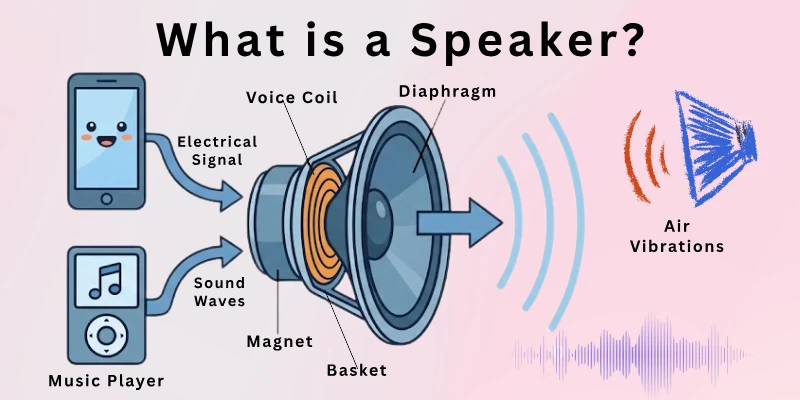
We use speakers every day without even noticing. They help us listen to music, voices, videos, and alerts in a simple and easy way.
Uses of a Speaker
- Listening to music on phones, laptops, and music players
- Watching movies and hearing dialogue clearly
- Attending online classes or meetings
- Making public announcements in halls or events
- Playing game sounds for a better experience

What is a Microphone?
A microphone is a device that catches sound and turns it into electrical signals. It helps you send your voice into a computer, phone, or recording device. When you speak into it, it picks up your voice clearly and sends it forward for recording or communication.
We use microphones in many daily activities. They help us talk in online meetings, record videos, and make voice calls with better sound quality.
Uses of a Microphone
- Talking in online classes and meetings
- Recording voice for videos, podcasts, or songs
- Making phone and internet calls
- Gaming communication with teammates
- Public speaking and stage events
Comparison Table of Microphone vs Speaker
A speaker and a microphone both deal with sound, but they work in opposite ways. A speaker plays sound, while a microphone captures sound. The table below shows their main differences in a simple and clear way:
| Feature | Speaker | Microphone |
| Main Function | Produces sound | Captures sound |
| Device Type | Output device | Input device |
| Sound Direction | Device → Listener | User → Device |
| Use | To hear audio | To record or send a voice |
| Example | TV, mobile, laptop, speaker | Phone mic, headset mic |
| Role in Communication | Delivers sound | Sends voice or audio |
In-Depth Features of Speaker and Microphone Comparison
Here are the key features of speakers and microphones explained in a simple way. These points will help you clearly understand how both devices work differently in daily use.
Features List (Difference between Microphone and Speaker):
- Sound Output vs Sound Input
- Direction of Sound Flow
- Device Type (Input or Output)
- Working Purpose
- Signal Conversion Process
- Power Requirement
- Sensitivity Level
- Noise Handling Ability
- Frequency Response Range
- Audio Clarity Level
- Connectivity Options
- Build and Design
- Usage Purpose in Daily Life
- Portability and Ease of Use
Let’s dive into all the points in detail.
1. Sound Output vs Sound Input
Now, let’s understand how sound output and sound input work differently in speakers and microphones:
Speaker: A speaker sends sound out to the listener. It takes electrical signals and converts them into audio that we can hear. You use speakers to listen to music, watch videos, or hear voices clearly. The main job of a speaker is to deliver sound to people.
Microphone: A mic works in the opposite way. It collects sound from your voice or surroundings. Then it changes that sound into signals for recording or communication. You use it when you want to speak into a device or send your voice to others.
2. Direction of Sound Flow
Here is how the direction of sound flow changes between a speaker and a microphone:
Speaker: A speaker sends sound from the device to the listener. It pushes audio outward so people can hear it clearly. This makes it useful for playing music, movies, and announcements. The sound always moves away from the device.
Microphone: A microphone works by taking sound from the user into the device. It captures your voice or nearby sound and sends it for processing. This helps in recording or communication. The sound always moves toward the device.
3. Device Type (Input or Output)
Let’s look at how both devices are classified based on their function in a system:
Speaker: A speaker is an output device. It produces sound from digital signals. You use it to hear audio from your device. It delivers the final sound to the user.
Microphone: A microphone is an input device. It sends voice or sound into the system. It helps computers or phones understand audio input. It is used when you speak into a device.
4. Working Purpose
Now, let’s understand the main purpose of how speakers and microphones work in real use:
Speaker: A speaker works to play sound for the user. It takes audio signals and turns them into sound waves we can hear. You use it when you want to listen to something clearly. Its main purpose is to deliver sound to people in an easy way.
Mic: A microphone works to capture sound from the user or the environment. It collects voice or audio and converts it into signals. You use it when you want to speak or record sound. Its main purpose is to send your voice to a device.
5. Signal Conversion Process
Here is how both devices convert sound into different forms:
Speaker: A speaker changes electrical signals into sound waves. It receives audio data from a device and plays it as sound. This process allows you to hear music, speech, or effects. It focuses on producing clear and loud audio.
Mic: A microphone changes sound waves into electrical signals. It captures your voice through a small internal part. Then it sends that signal to a device for recording or transmission. This process helps in communication and audio recording.
6. Power Requirement
Let’s see how speakers and microphones use power to function:
Speaker: A speaker needs more power to produce a strong sound. It often connects to an external power source or amplifier. Without power, it cannot produce loud or clear audio. Bigger speakers usually need more energy.
Microphone: A microphone needs very little power to work. Some microphones even work directly from a phone or computer. It only needs power to capture and send signals. It is designed to be energy efficient.
7. Sensitivity Level
Now we compare how sensitive both devices are to sound:
Speaker: A speaker is less sensitive to sound. It does not listen to the sound around it. Instead, it focuses on producing audio. Its job is to project sound, not capture it.
Microphone: A microphone is highly sensitive to sound. It can pick up even soft voices or background noise. This helps in clear recording and communication. High sensitivity makes it useful for professional audio work.
8. Noise Handling Ability
Let’s see how both devices deal with unwanted noise:
Speaker: A speaker does not handle noise because it only plays sound. However, poor-quality speakers may distort audio at high volume. Good speakers keep the sound clear even at louder levels. They focus on output clarity.
Microphone: A microphone must manage background noise carefully. Some microphones reduce unwanted sounds automatically. This helps keep voice recordings clear. Good noise handling improves audio quality a lot.
9. Frequency Response Range
Now let’s compare how speakers and microphones handle different sound frequencies:
Speaker: A speaker plays a wide range of sounds, from low bass to high tones. This range decides how rich and full the audio sounds. Good speakers give balanced sound across all frequencies. This helps you enjoy music, movies, and games better.
Microphone: A microphone captures different sound frequencies from your voice or surroundings. Some microphones focus more on voice clarity than on deep or high tones. A good frequency range helps record natural and clear audio. This is important for calls, recordings, and live sessions.
10. Audio Clarity Level
Here is how both devices affect the clarity of sound:
Speaker: A speaker delivers sound so you can hear it clearly and comfortably. High-quality speakers reduce distortion at normal volume levels. This makes music and speech sound clean and pleasant. Better clarity improves your listening experience.
Mic: A microphone focuses on capturing clear voice input. It picks up small details in your speech for better recording. Good microphones reduce muffled or unclear sound. This helps others hear you properly during calls or recordings.
11. Connectivity Options
Now let’s see how both devices connect to other systems:
Speakers: A speaker connects through wires like AUX, USB, or Bluetooth. Many modern speakers also support wireless pairing. This makes it easy to use with phones, TVs, or laptops. Different options give more flexibility in daily use.
Mic: A microphone connects through USB, audio jack, or wireless systems. Some microphones also work with Bluetooth for easy setup. They connect directly to phones, computers, or recording devices. Simple connectivity helps in quick use without technical steps.
12. Build and Design
Here is how design and structure differ in both devices:
Speaker: A speaker is usually larger in size with a strong outer material. It is designed to produce louder sound and handle vibrations. Some speakers are portable, while others stay in one place. The design focuses on sound delivery and durability.
Mic: A microphone is small and lightweight for easy handling. It is designed to capture sound close to the source. Many microphones come with stands or clips for stability. The design focuses on accurate sound pickup.
13. Usage Purpose in Daily Life
Let’s understand how people use both devices in real situations:
Speaker (Daily Use): People use speakers for entertainment and group listening. You can hear music, watch movies, or join meetings using speakers. They are useful in homes, schools, and public places. Speakers make sound shared and easy to hear.
Microphone (Daily Use): People use microphones for speaking, recording, and communication. You use them in online classes, meetings, or content creation. They help others hear your voice clearly. Microphones are important for one-to-one or online communication.

14. Portability and Ease of Use
Now let’s compare how easy both devices are to carry and use:
Speaker: Some speakers are portable and easy to carry. Others are large and need a fixed place. Portable speakers work well for travel and outdoor use. Ease of use depends on size and design.
Microphone: A microphone is usually very small and easy to carry. You can hold it or attach it to clothing or stands. It works well in mobile setups and recording spaces. Its simple design makes it easy to use anywhere.
Advantages and Disadvantages of Speakers and Microphones
Now, let’s understand the benefits and limitations of speakers and microphones in simple and clear words. This will help you see how both devices are useful in daily life and where they can create problems.
Advantages of a Speaker
Here are the main benefits of using a speaker in everyday situations:
- Easy sound sharing: A speaker plays the sound loudly so that many people can hear it at the same time.
- Better entertainment experience: It improves music, movies, and gaming by making sound more powerful and clear.
- Useful for group use: You can use it in classrooms, meetings, or events where more than one person listens.
- Simple to use: Most speakers work with easy plug-and-play or Bluetooth connections.
- Wide compatibility: You can connect speakers to phones, laptops, TVs, and other devices.
Disadvantages of a Speaker
Now, let’s look at the common problems you may face with speakers:
- Disturbs others: Loud sound can affect people nearby who do not want the noise.
- Needs more power: Some speakers require charging or external power to work properly.
- Sound loss at high volume: Very high volume can reduce sound quality or cause distortion.
- Not private: Everyone around can hear the audio, so it is not suitable for private listening.
- Space requirement: Bigger speakers need more space and are not easy to move.
Advantages of a Microphone
Here are the main benefits of using a microphone in daily use:
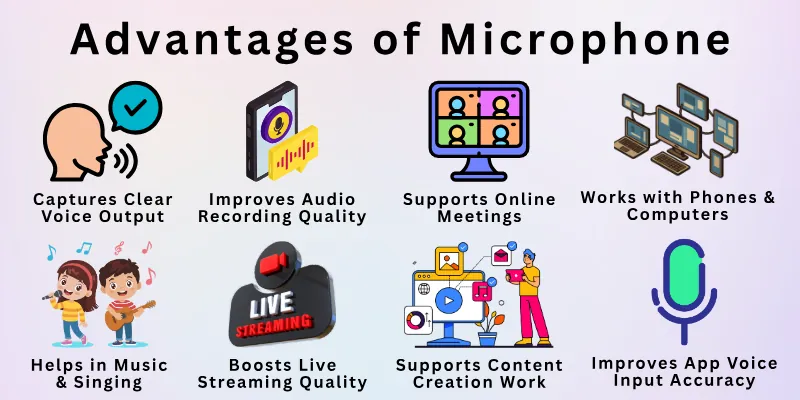
- Clear voice capture: It records or sends your voice clearly for communication or recording.
- Important for online work: You can use it in meetings, classes, and video calls.
- Useful for content creation: It helps in making videos, podcasts, and live streaming.
- Improves communication: It allows others to hear your voice clearly from a distance.
- Works with many devices: You can connect it to phones, computers, and recording tools.
Disadvantages of a Microphone
Now, let’s see the common limitations of microphones:
- Picks background noise: It may capture unwanted sounds from the environment.
- Needs proper setup: Wrong placement or settings can reduce sound quality.
- Depends on environment: Noisy places can affect recording clarity.
- Sensitive to handling: Small movements or shocks can affect performance.
- May need extra tools: Some microphones need stands, filters, or software for better use.
Who Should Use a Speaker?
So, let’s understand who gets the most benefit from using a speaker in daily life. This will help you decide if it fits your needs:
- Students and families: You can use speakers to listen to online classes, music, or videos together at home.
- Teachers and trainers: Speakers help you share audio clearly in classrooms or training rooms.
- Event organizers: You can use speakers for announcements, speeches, or public events.
- Entertainment users: If you enjoy movies, music, or gaming, a speaker improves your sound experience.
- Office teams: Speakers help in group meetings where everyone needs to hear the same audio.
Who Should Use a Microphone?
Now, let’s see who should use a microphone for better communication and recording.
- Content creators: You can use microphones for YouTube videos, podcasts, and live streaming.
- Online teachers and students: Microphones help you speak clearly during online classes and meetings.
- Gamers: You can talk with teammates clearly during online gaming sessions.
- Business professionals: Microphones improve voice quality in virtual meetings and presentations.
- Public speakers: You can use microphones to project your voice in large gatherings or events.
How to Choose the Right Device for Your Needs
Choosing between a speaker and a microphone depends on what you want to do. If you want to hear sound clearly, a speaker is the right choice. If you want to record or send your voice, a microphone works better.
Let’s break it down into simple points so you can decide easily:
- Choose a speaker if you want to listen: Use it for music, movies, games, or group audio sharing.
- Choose a microphone if you want to speak or record: It is best for calls, recording videos, or online classes.
- Think about your main use: Entertainment needs speakers, while communication needs microphones.
- Check your device setup: Make sure your phone, laptop, or system supports the device you choose.
- Consider sound quality needs: Pick a good-quality device if you need clear and professional audio.
- Think about portability: Choose portable devices if you travel or move often.
- Set your budget: Select a device that fits your price range without losing basic quality.
Common Mistakes People Make When Using Speakers and Microphones
Many people use speakers and microphones every day, but they often make small mistakes that affect sound quality and performance. Let’s look at these common mistakes so you can avoid them and get better results.
- Using high volume all the time on speakers: This can damage sound quality and even reduce the life of the speaker.
- Placing the microphone too far or too close: The wrong distance can make your voice unclear or too loud.
- Ignoring background noise: Many users forget to reduce noise, which affects recording and calls.
- Not checking device settings: Wrong audio settings can reduce clarity and performance.
- Using low-quality cables or connections: Poor connections can create sound breaks or distortion.
- Speaking too softly into microphones: Low voice levels make it hard for others to hear clearly.
- Blocking speaker output: Covering speakers reduces sound quality and volume.
- Not updating drivers or software: Old drivers can cause sound issues on computers or laptops.
Conclusion
In this article, we’ve covered the difference between speakers and microphones in a simple and clear way. I believe both devices play important roles in daily communication and entertainment.
From my experience, a speaker works best for group listening, while a microphone is best for speaking and recording. I suggest you always focus on your purpose before buying any device.
Don’t skip the next part of the FAQs. I hope you will find something more interesting, so don’t miss it. If you miss it, you may lose something new.
FAQs About Speakers and Microphones
Here are some frequently asked questions about the difference between mic and speaker that will help clear your doubts:
A speaker and a microphone work in opposite ways in sound systems. A speaker plays sound so you can hear it clearly. A microphone takes sound from your voice and sends it into a device.
A speaker is an output device used in computers and audio systems. It takes sound signals and converts them into audio we can hear. This helps users enjoy music, videos, and calls.
A microphone is an input device that captures sound from the user. It changes voice or audio into digital signals. This is useful for recording, calling, and communication.
A speaker cannot properly work as a microphone in normal use. It is designed only to produce sound, not capture it. Some advanced devices may combine both functions, but they are different in design.
Both devices are important for online meetings. A microphone helps you speak clearly to others. A speaker helps you hear other people in the meeting.
Speakers are used in many everyday activities. They help you enjoy sound in a simple way.
- Listening to music and podcasts
- Watching movies and videos
- Attending group meetings or classes
Microphones are widely used for communication and recording. They help capture a clear voice for different tasks.
- Online classes and virtual meetings
- Voice recording for videos or podcasts
- Gaming communication with teammates
A microphone is very sensitive to sound, which is why it captures background noise. It records all nearby sounds, not just your voice. This is why quiet environments give better audio quality.
Choosing depends on your purpose and daily needs. If you want to listen, go for a speaker. If you want to speak or record, choose a microphone. Both serve different roles in communication systems.


- Be Respectful
- Stay Relevant
- Stay Positive
- True Feedback
- Encourage Discussion
- Avoid Spamming
- No Fake News
- Don't Copy-Paste
- No Personal Attacks
- Be Respectful
- Stay Relevant
- Stay Positive
- True Feedback
- Encourage Discussion
- Avoid Spamming
- No Fake News
- Don't Copy-Paste
- No Personal Attacks